
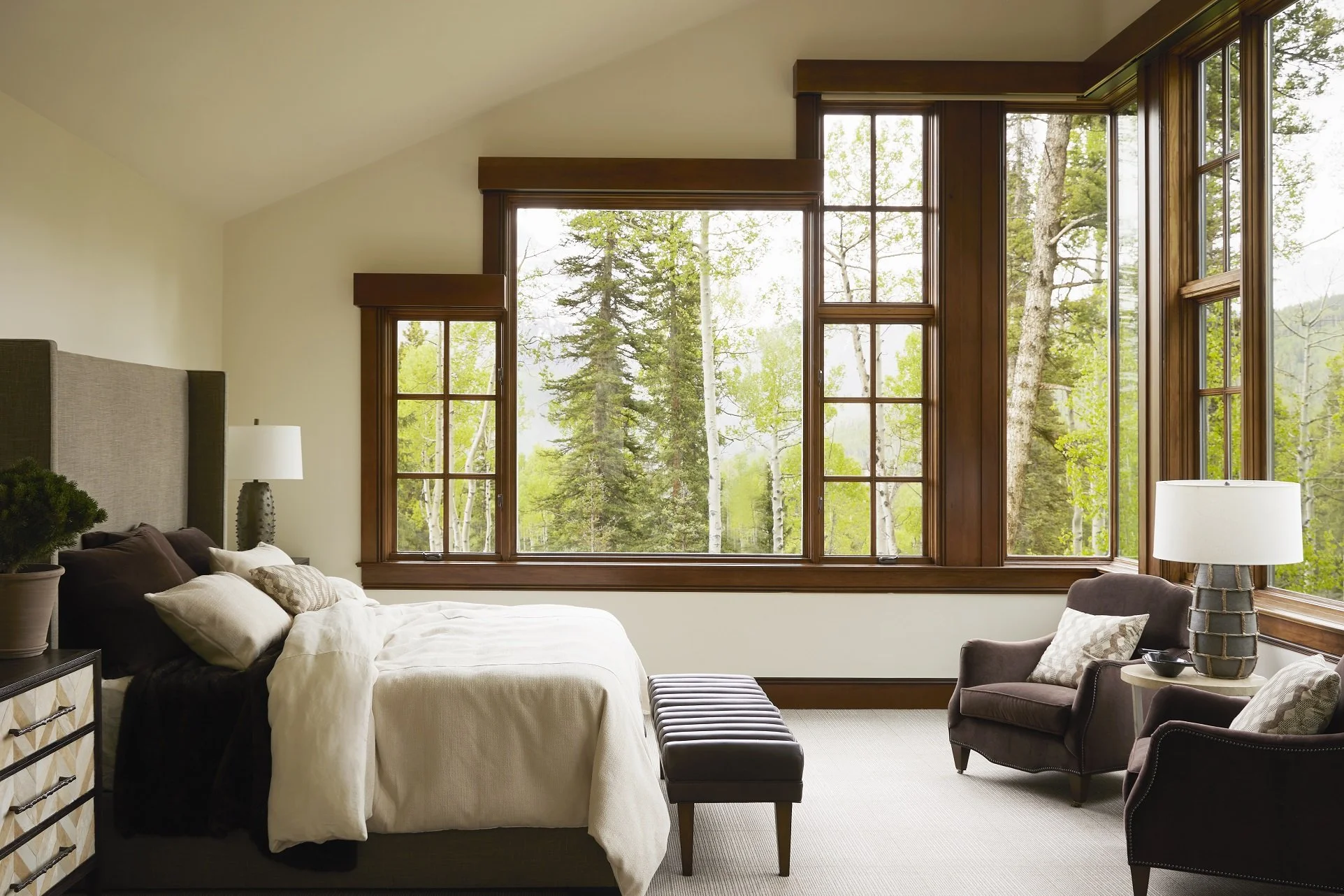
Minimalist interiors will help emphasize your home’s exterior views, rather than distract from them.
Most people have heard of minimalism, but “maximalism” is a newer term that you might not be familiar with. While minimalism is about creating a calm, clutter-free environment, maximalism embraces abundance, bold colors, and layered patterns. Working as a Dallas interior designer, I have experience with both styles.
This article focuses on minimalism; in my next article, I’ll discuss maximalism in more detail. Learning about each style and seeing examples can help you determine which design philosophy suits your lifestyle the best.
The “Less is More” Mindset
Minimalist interior design is inspired by mid-century modern architecture and shares a lot of its principles, like clean lines, monochromatic color schemes, and geometric shapes. Some famous minimalist artists include Agnes Martin, Frank Stella, and Donald Judd. Ludwig Mies van der Rohe, a mid-century modern architect, is the person who popularized the phrase, “less is more.”
American minimalism shares a lot in common with Scandinavian and Japanese design principles. In both Japanese and Scandinavian design, there is a focus on living simply and avoiding excessive ornamentation. Minimalism also appeals to people concerned about sustainability and reducing consumption.
Is Minimalism Right for You?
You might be a minimalist if:
You feel overwhelmed by bright colors and busy patterns.
You want to come home to a calm environment after a stressful day.
You want to declutter, downsize or simplify your life.
You prefer modern style over a traditional look.
You want to emphasize your home’s architecture or outdoor views.
Curate Your Home Like a Minimalist
The first step to mastering minimalism is to pare down your possessions. You’ll need to exercise restraint with the amount of furniture and decorative objects in the room. Minimalists curate their belongings carefully, favoring functional and practical items. A minimalist asks: do we really need to add art to every wall? How many trinkets do we need to put on our bookshelves and coffee tables?
If you need to buy anything new for your home, go for timeless or classic items rather than trendy ones. That way, you won’t need to redecorate as often. You can take advantage of storage solutions to help conceal clutter.
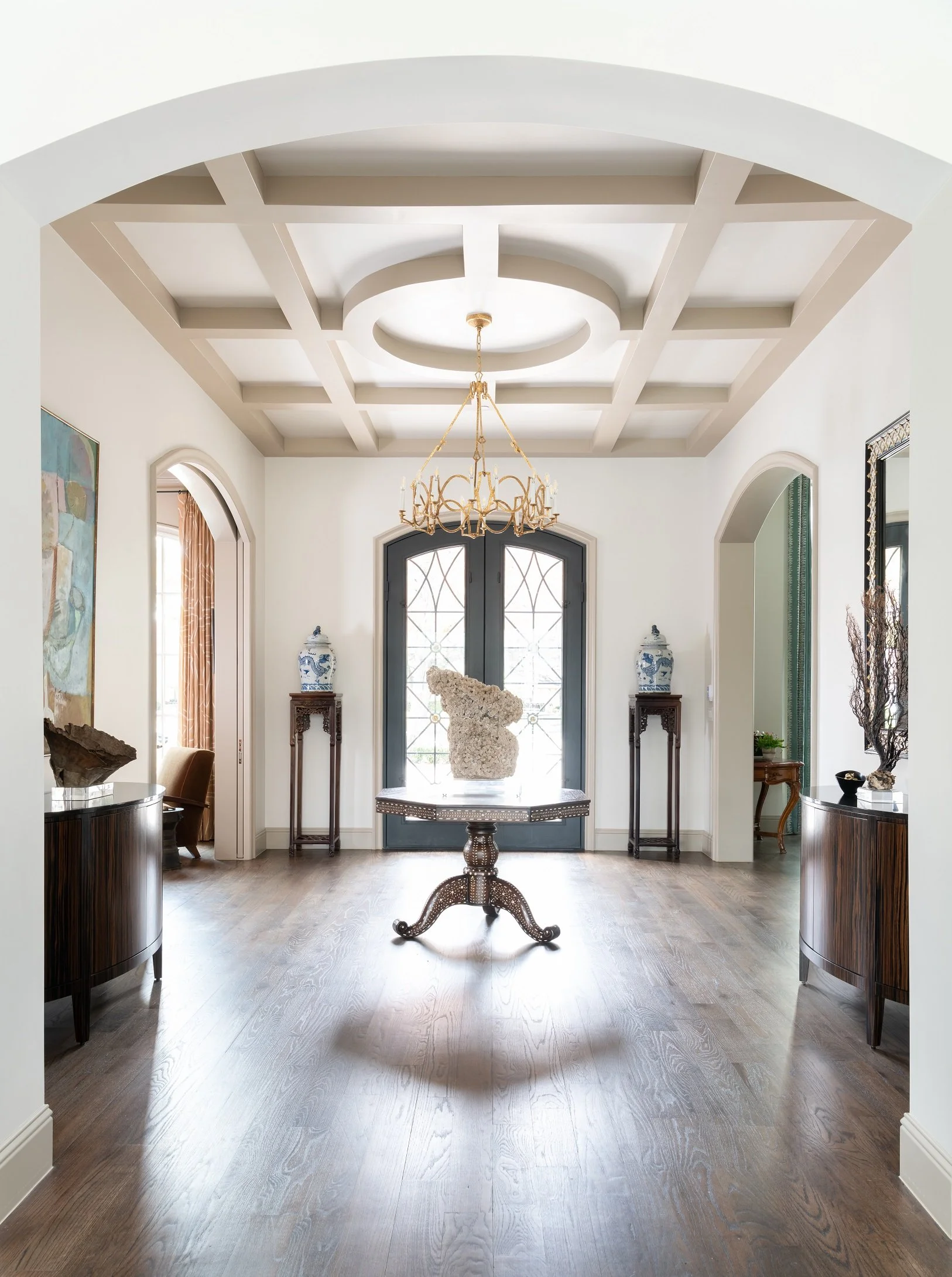
Open floor plans are the best layout for minimalist homes because they maximize the amount of open space. Letting in as much natural light as possible will also contribute to the open and airy feel. Seen here is the foyer from a Dallas home we designed.
Choose an Understated Color Scheme
The color schemes in minimalist spaces are typically in shades of white, gray, or beige, while bright colors and black are occasionally used as accents.
That said, remember that minimalism is about being purposeful with what you bring into your home, not following strict rules or trying to match the minimalist rooms you see online. It’s okay to add a little more color and personality to the room. You can even use colors like green, blue, or pink on the walls—as long as the room is still simple and uncluttered, it will still feel minimalist.
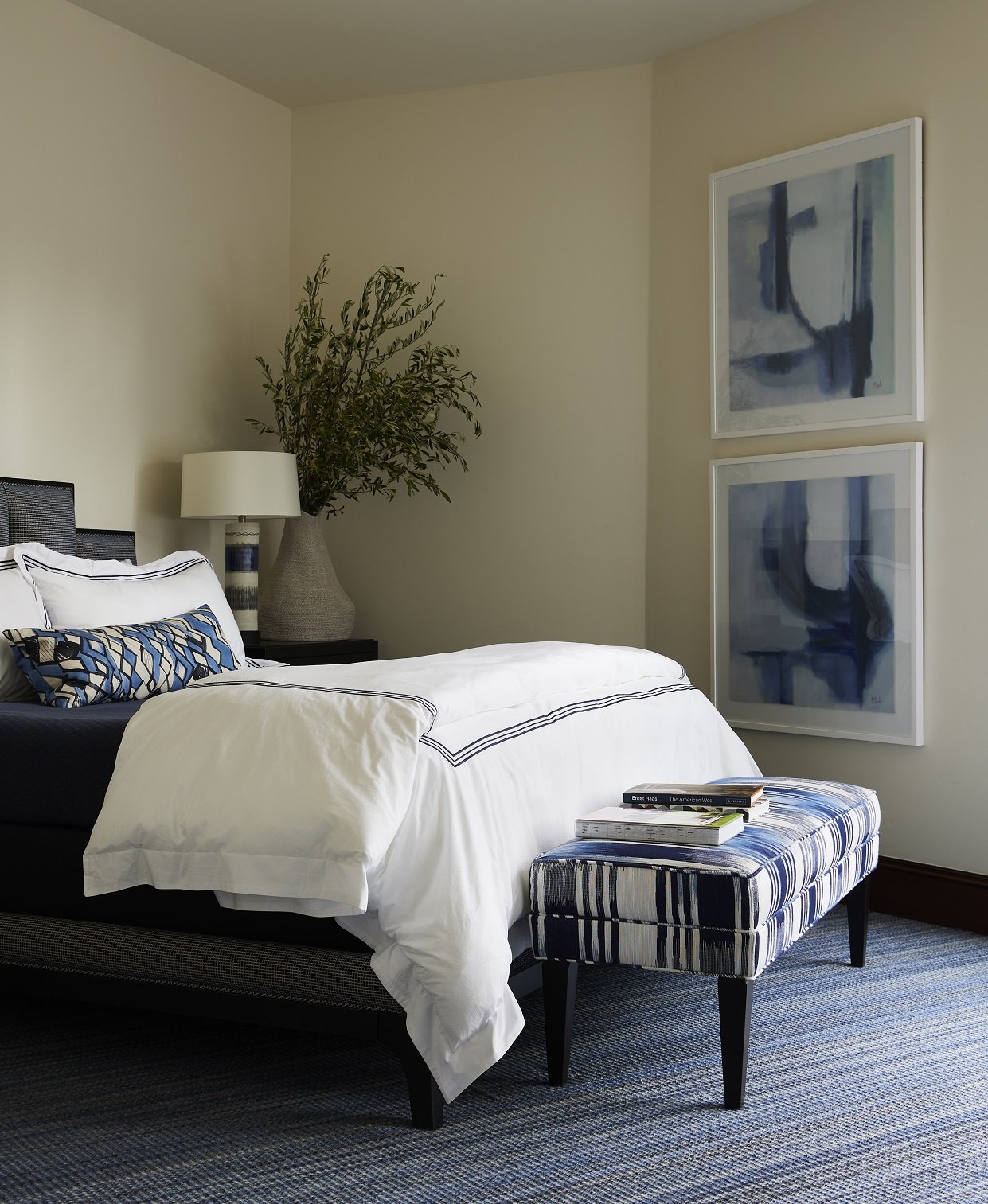
Blue-and-white is a good color scheme for minimalist homes because it is so calming. Notice the abstract watercolor paintings on the walls of this bedroom, which add to the modern look.
Pick Appropriate Art
Any artwork and accessories must be carefully chosen and positioned to create the most impact. The art in a minimalist space will usually be modern or contemporary, such as abstract watercolors, sculptures, or pop art.
Interestingly, multicultural antiques, like African art, can also go well with minimalist spaces because of their emphasis on strong shapes and lines. Modern art painters such as Picasso found a lot of inspiration in African masks. On the other hand, traditional Western art, such as pastoral scenes and classical portraits, tends to look out of place in a minimalist home.
Avoiding the Pitfalls of Minimalism
One of the pitfalls of minimalist design is that it can end up looking cold and stark. If your home doesn’t feel welcoming, try adding more organic materials like wood, or using warm neutral colors like brown, beige, or a warm shade of gray. Soft fabrics and textures like wool or linen can also help a minimalist room feel cozy.
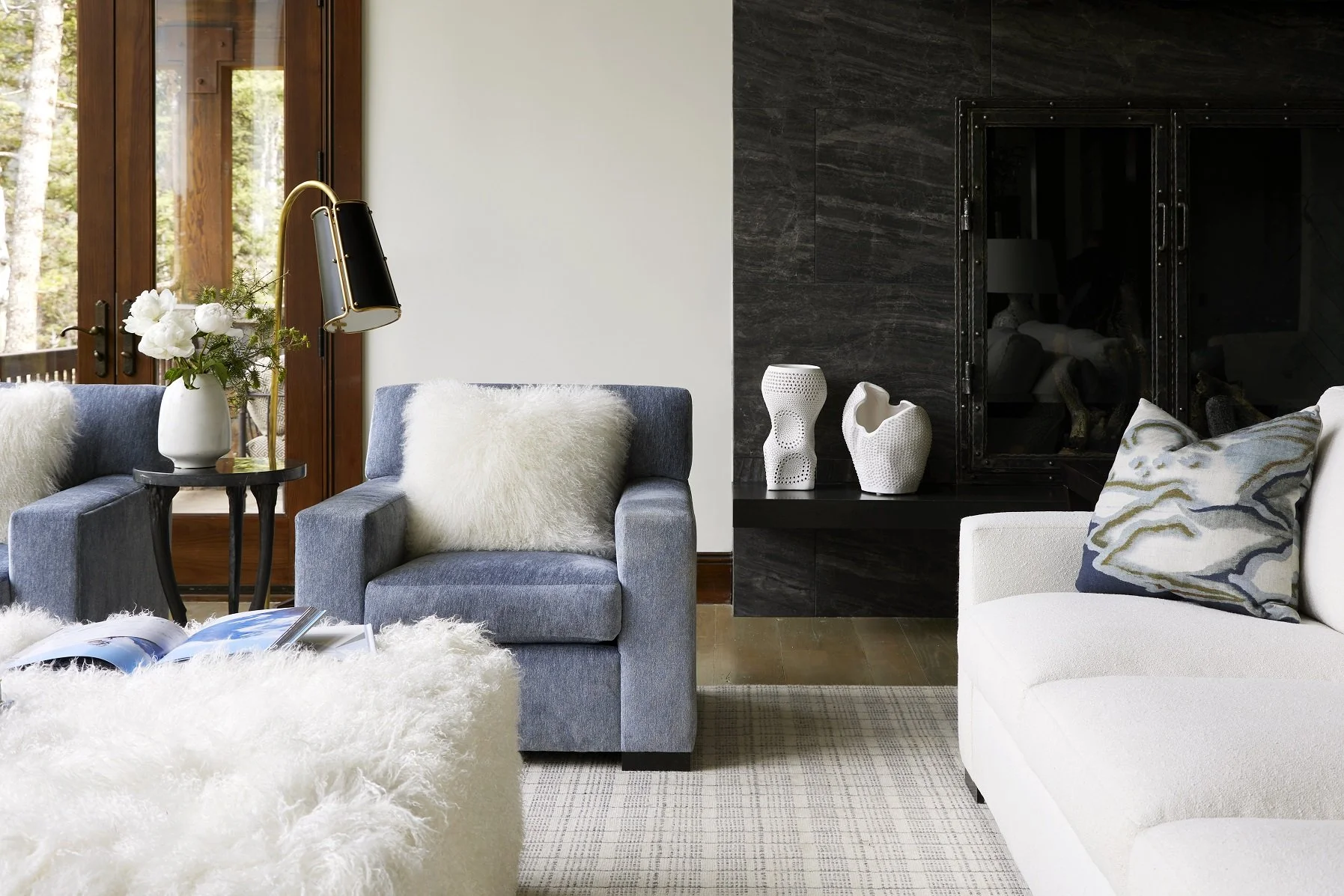
Softly textured items, like these furry pillows, make a minimalist space feel more comfortable. This seating area is from a vacation home we designed in Telluride, Colorado, which was recently published in Mountain Living magazine.
It can be challenging to design a minimalist room that is also interesting to look at. You must choose simple-but-strong shapes and lines, quality materials, and use light wisely. Once your design feels balanced, beautiful, and functional, stop adding to the space.
Do you admire minimalist homes, but have trouble letting go of your belongings? Do you worry that the final result will just look empty? A designer like myself who has experience with minimalist spaces can help your project stay on its course. By either working with a designer, or doing a lot of your own research, you can create a minimalist home that showcases the true beauty in simplicity. To schedule a consultation with Chambers Interiors, email us at margaret@chambersinteriors.com or call our Dallas office at 214-651-7665.