
bathrooms

Create Your Own Oasis with a Spa-Style Bathroom by Margaret Chambers

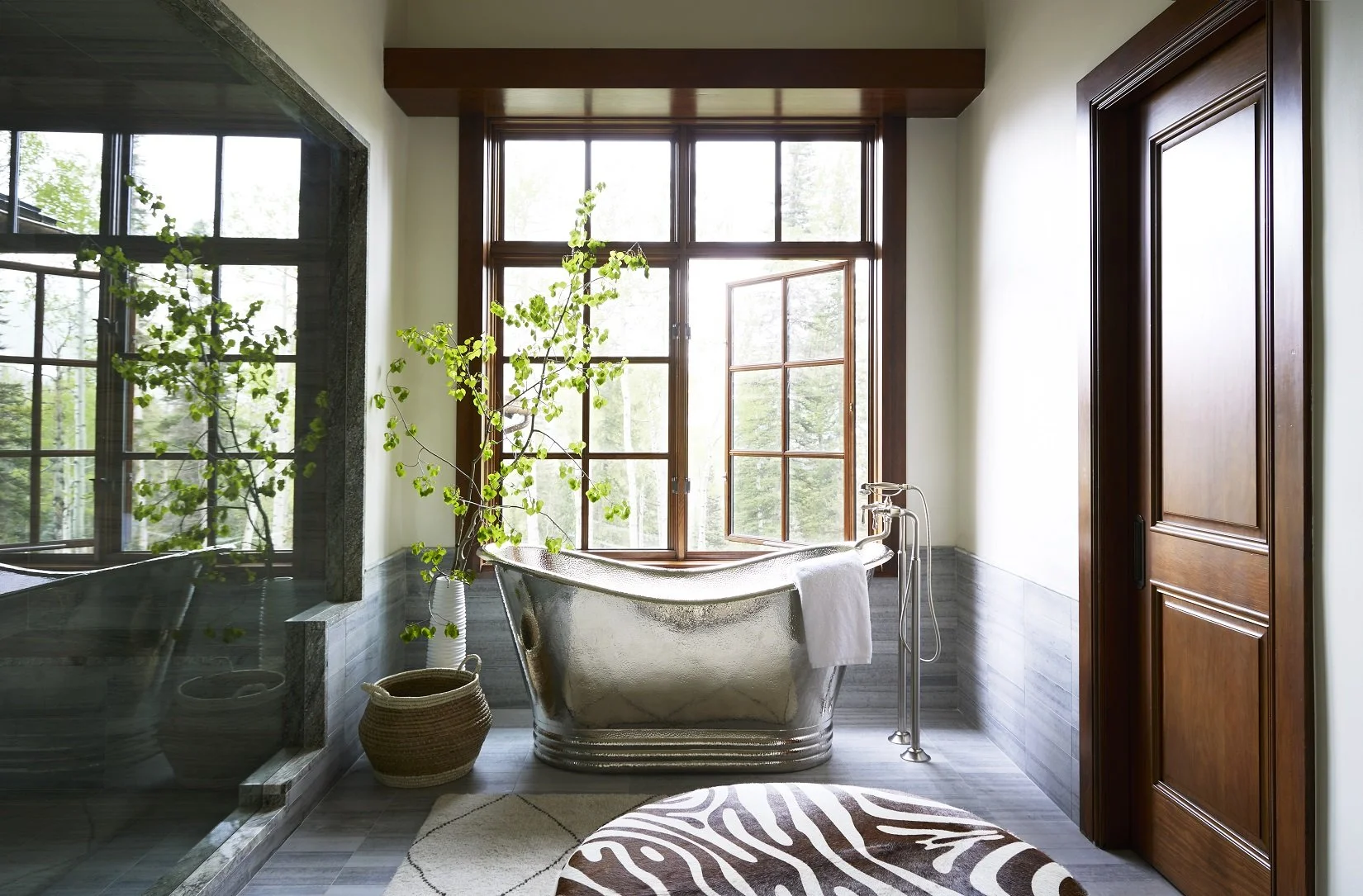
Greenery adds an organic touch to this spa-like bathroom we designed in a Colorado vacation home. Lately, we’re encouraging clients to do heated floors in their primary bathrooms. This heated floor is made of Ann Sacks Sully Noir limestone.

Stepping into a spa is like stepping into another world. You can leave your worries at the door, and feel restored and ready to face another day. As a professional interior designer, I’ve created healing spaces for many of my Dallas clients. Below, you’ll find my professional tips for designing a spa-style bathroom in your own home.

Step 1: Set the Stage with Beautiful Flooring

Marble is a popular choice for bathroom flooring (as well as backsplashes and vanities) because it is both water-resistant and luxurious. Regardless of what type of stone or tile you choose for your flooring, larger tiles will have a cleaner look than smaller ones. The more tiles you have, the more grout lines there are.

Stone floors can be cold to the touch and dangerous when slippery. A plush rug prevents slippage and gives your feet a soft landing area when you step out of the shower. Make sure your rug is made of a quick-drying material (such as cotton, bamboo, or wool) to prevent mold or mildew growth.
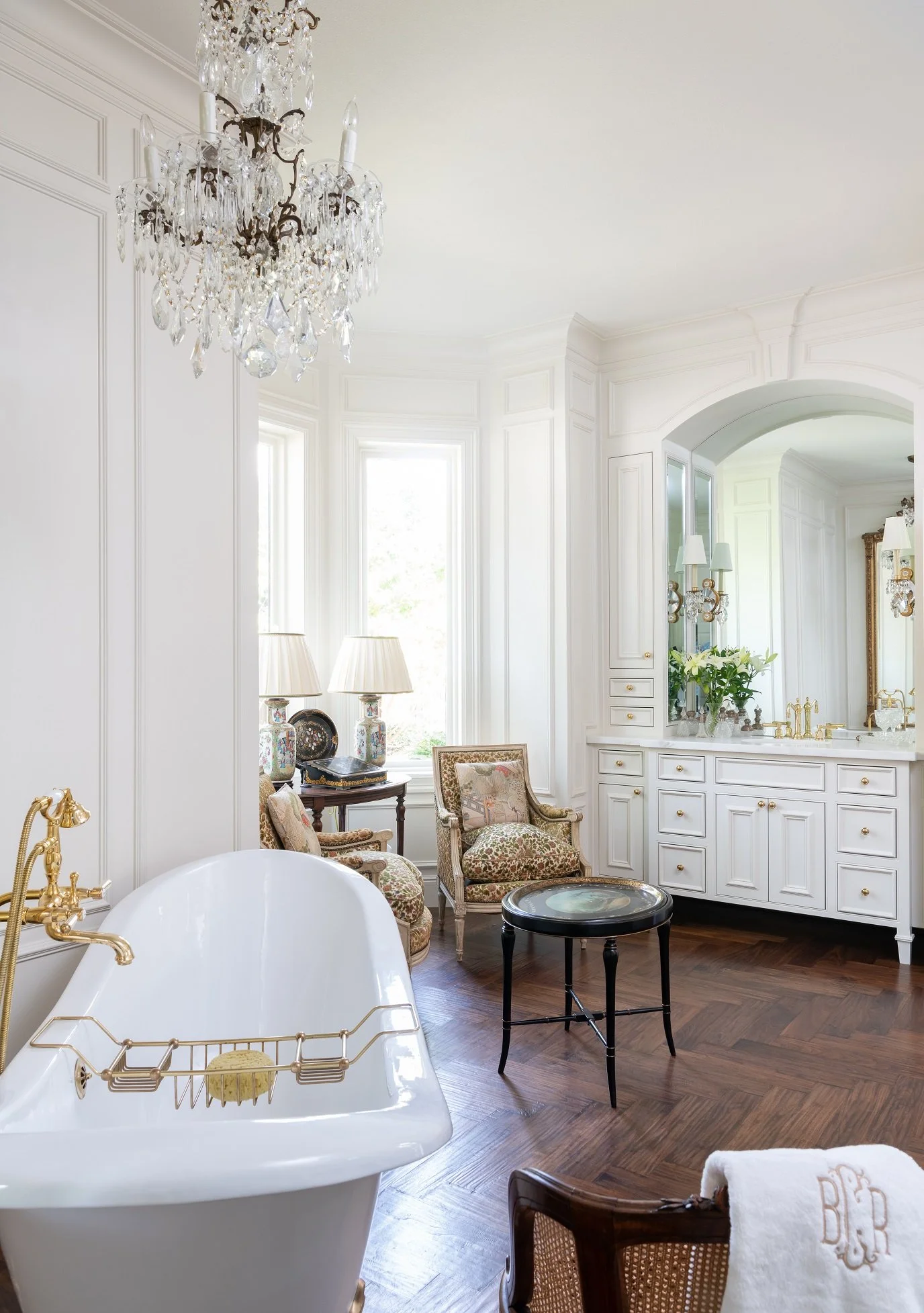
Believe it or not, it’s possible to use wood flooring in a bathroom if you coat it properly to protect it against water damage. We used extra coats of polyurethane on the wood floors in this bathroom.

If you’re designing your bathroom from scratch, take a moment to consider if you want a wet room. A wet room is an open-concept bathroom where everything is waterproof. There is little to no separation between the walk-in shower, the freestanding tub, and the rest of the bathroom. The clean lines and simplicity of a wet room bring a spa to mind. The downside of wet rooms is that they can feel hard and cold. You can make them more comfortable by adding a water-resistant shower bench for seating and installing heated tiles.

Step 2: Organize

Have you ever seen a cluttered spa? If you want your bathroom to be a place where you can truly unwind, you’ll need to make it a clean and minimalist environment. Look for expired products or items you haven’t used in a long time, then discard them. Then, decant your lotions, liquid soaps, shampoos, etc. into matching dispensers for a cohesive look.

This room was pretty small for a primary bathroom, so we had to get creative to maximize space. We built towers on either side of the his-and-her vanities to add more storage. Hot-rollers, hairdryers, electric toothbrushes, etc. could be plugged into the towers.

Cotton rounds and Q-tips can be removed from their plastic containers and put into glass jars. Store as many items as you can out-of-sight; counter space should be reserved for items you use daily. Trays, baskets, or drawer organizers can help you group similar items together. Instead of a standard bathroom trash can, try a more charming alternative like a woven basket. Any towels that are visible should be neatly folded or rolled up.

Step 3: Tone Down Your Color Scheme

Color can affect our psychological state, so it’s no surprise that spas tend to have calming, nature-inspired color schemes. A spa-like bathroom could feature shades of white, light blue, seafoam green, muted pink, soft gray, or beige. Towels should be white, cream color, sand, or olive green.

Stay away from bold colors, high-contrast color combinations, or busy patterns. Also, keep in mind that the light bouncing off of dark or bold wall colors can reflect on your skin, making it tricky to assess how your makeup looks.
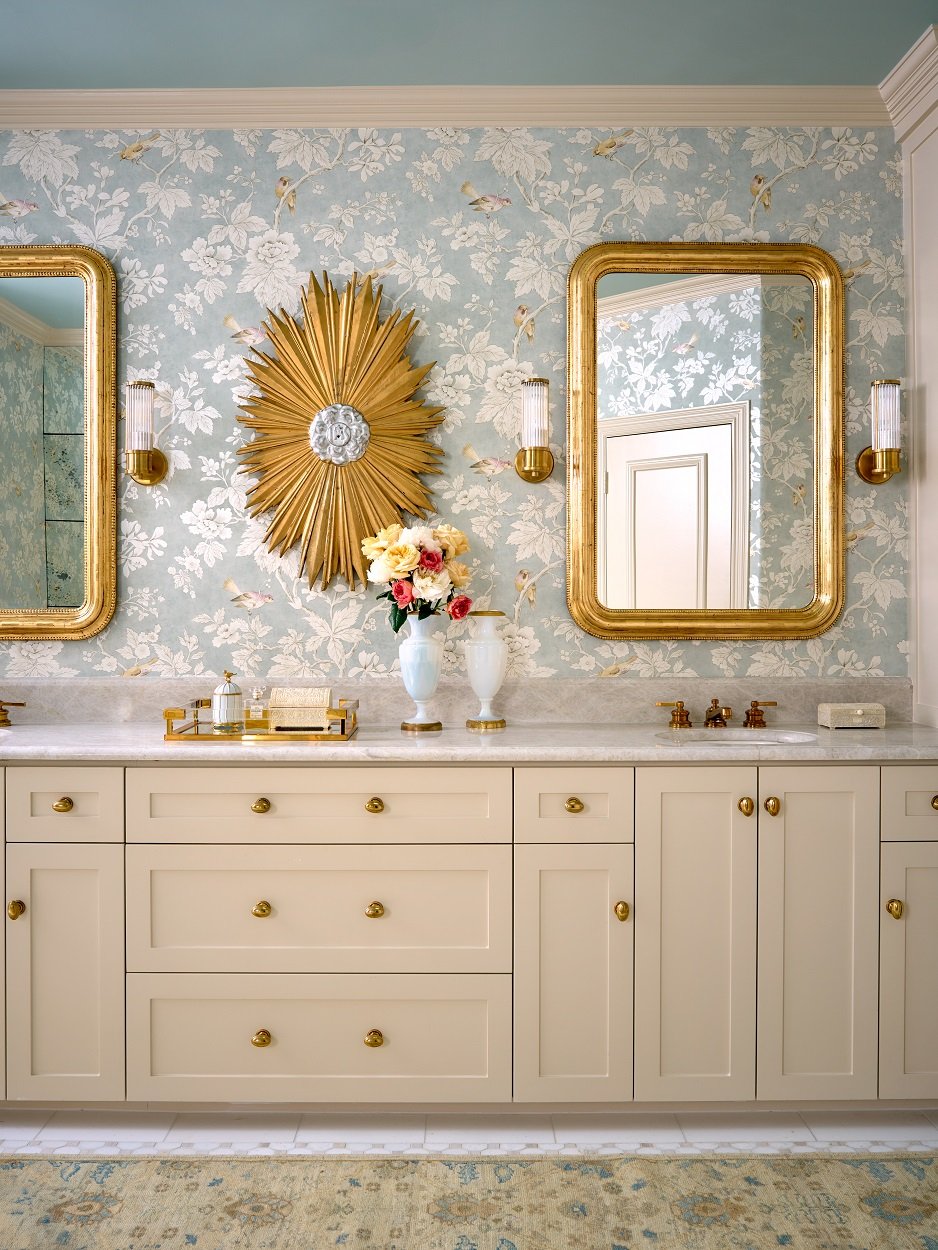
The blue-and-white wallpaper with birds creates a soothing setting for this primary bathroom in a University Park home. Bright brass accents add just the right amount of sparkle.

Step 4: Adjust Lighting

Spas typically have subdued, warm lighting. After all, there’s nothing more relaxing than a candlelit bath. If your lighting is too bright and “cold,” it promotes a feeling of alertness and makes it harder to relax. Of course, there are times when you want to be able to see clearly, too. Dimmable lights help you control the brightness levels, giving you the best of both worlds. During the day, you’ll want to maximize the natural light in the room. Add window treatments to any large windows so that you can have privacy, day or night.

Step 5: Decorate Your Walls Carefully

Any art you hang in your spa bathroom should be at least a little understated. Nature-themed art is a safe choice, along with abstract watercolors and minimalist designs. If your bathroom feels a little cramped, try adding more mirrors to the walls. Using mirrors is a tried-and-true designer trick for making a small room seem larger.

Seen here is a seating area in the primary bathroom of a Turtle Creek home we designed.

Step 6: add Places to Rest

Consider getting a stool for your vanity so you can get ready for the day either standing or sitting. An extra sitting area or reading corner also helps signify that this bathroom is a place to relax and unwind. Make sure that any upholstery you choose can withstand steam. Indoor/outdoor fabrics are a good option.

Step 7: include Luxury Accessories and Features

If you want to go the extra mile, you could even add a sauna (wet or dry) or a steam shower to your bathroom. Other luxurious upgrades include adding heated toilet seats, or replacing your standard shower head with a rain showerhead.

A bathtub tray makes every bath feel a little more special. You can use it to hold a candle, a drink, a book, or bath products. Another often-overlooked accessory is a towel warmer. Stepping out of the shower into the cold isn’t so bad when a fluffy, freshly-warmed towel is close at hand. Try adding a few drops of essential oil to the bottom of the pile of towels to suffuse them with a pleasing scent.

Step 8: Bring Nature into the room

Greenery is an essential element for a peaceful environment. If you don’t have the best track record for keeping indoor plants alive, consider getting faux plants instead. There are many lifelike options on the market these days. An unused corner is the perfect spot for a faux tree. If you do choose live plants, research the amount of light they’ll need, and make sure they can thrive in a humid environment.
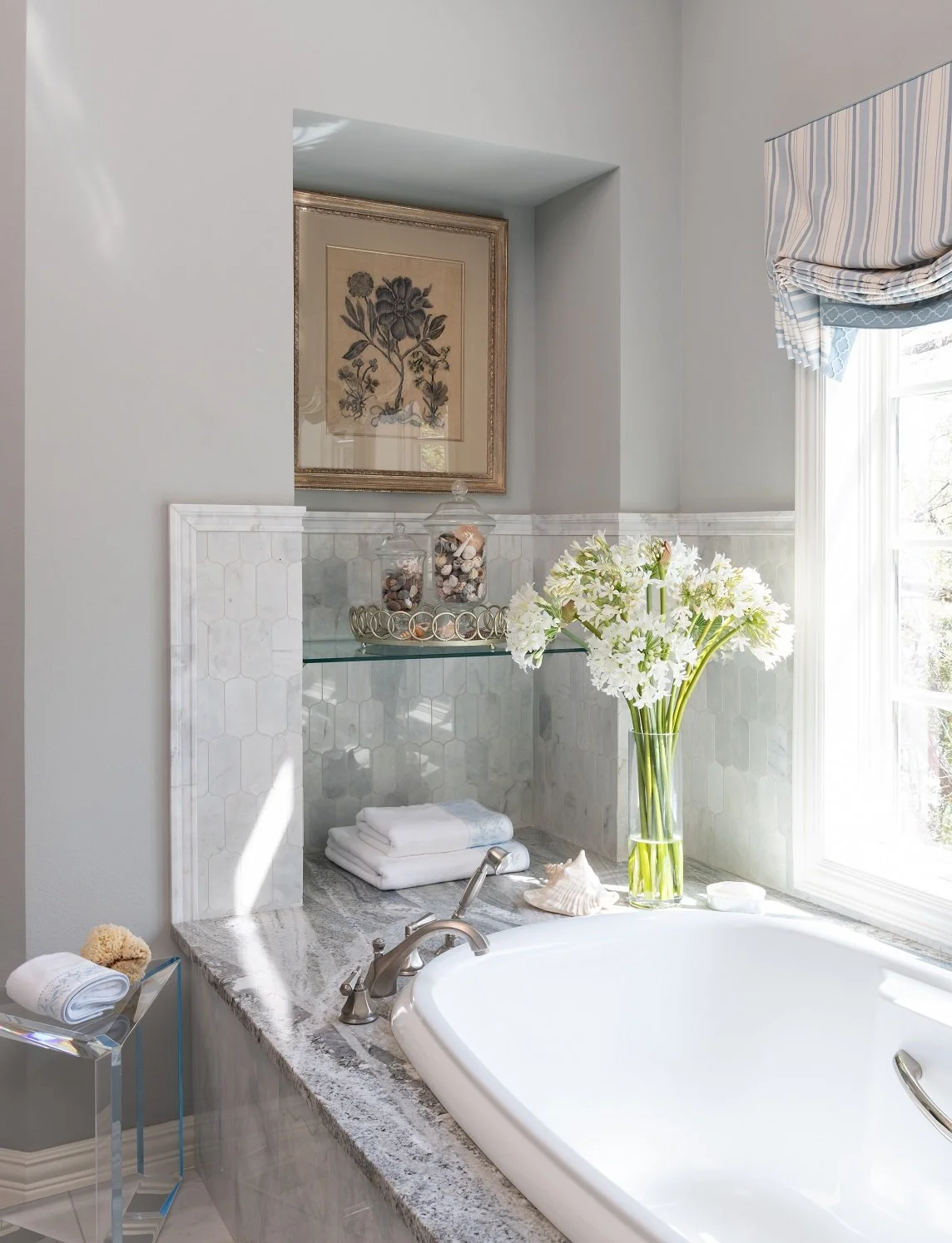
This bathroom has a lot of nature-themed accessories, such as the botanical print on the wall, the jars of seashells over the bathtub, and the vase of fresh flowers.

Step 9: Set the Mood

By using a portable speaker, you can fill the room with your own spa playlist. Spas often play instrumental music at a low volume. Appropriate genres include soft classical music, lounge music, and ambient music.

Scents can also have a profound impact on our state of mind. To recreate that “spa smell,” try diffusing essential oils, lighting scented candles, or using scented bath products such as bath salts, shower oils, and scented soaps. Rosemary, lavender, eucalyptus, and peppermint are all scents that promote relaxation. Another way to introduce a calming scent into the bathroom is by hanging a bundle of fresh or dried eucalyptus in your shower. Shower steam will activate its calming scent (note that eucalyptus is toxic for both cats and dogs).

Designing a spa-like bathroom can be a complex undertaking, but even simple changes like decluttering or updating your color scheme make a big difference. If you’re planning on going all-out, an interior designer like myself can guide your project and make sure there are no missteps. The results are worth it. After all, when you have a spa-style bathroom in your own home, any day can be a spa day. You can reach Chambers Interiors by calling our Dallas office at 214-651-7665 or emailing us at margaret@chambersinteriors.com.
Related Articles:

Future-Proof Your Home With These Design Tips for Aging-in-Place by Margaret Chambers

Our client needed to use a wheelchair while recovering from a virus when we started this house. We knew everything needed to be handicap-accessible. This wide entryway area permits plenty of room for a wheelchair to enter.

Today, more Dallas homeowners than ever are interested in aging-in-place, whether that means making renovations to their current home, finding a home that is wheelchair-accessible, or building a new home. This is especially true of the baby boomer generation, many of whom watched their parents go to assisted living.

The Americans with Disabilities Act (ADA) of 1991 set minimum standards for accessibility in newly constructed public facilities, and since then, these changes have been slowly making their way into the residential sector. The term “accessible design” encompasses homes designed for a variety of people with disabilities, but for this article, I’ll focus on wheelchair accessibility. Many of these design features can make the home more convenient for any homeowner, which is why some people refer to accessible design as “universal design.”

To be wheelchair-accessible, a home must have a wider doorway (preferably 36 inches) and a zero-step entrance. There should be no level changes in the house, not even a threshold for a door. ADA-compliant transition strips can help smooth thresholds between rooms. Since wheelchairs require a turning radius of 60-by-60 inches, open floor plans are a sensible choice.

If making the entire home wheelchair-accessible seems out of reach, consider making your home partially accessible. Even if you are not disabled or do not plan on retiring in your current home, you may wish to make your home more accessible so that aging or disabled parents, relatives, and friends can still visit you.

Carpets are a hassle for those who use assistive devices (interior designers like myself generally don’t like carpeting either). Go for hardwood flooring if you can, preferably with either flat-weave rugs or no rugs at all. Rugs should be secured to the floor with double-sided tape. If you must have carpet, choose cut-pile carpet or carpet with a thinner level loop.

Another accessibility feature we added to this Dallas home was a pair of grab bars in the shower.

Curb-less showers are not just accessible, but glamorous as well, making them a desirable feature. If you’re building a new bathroom, install plywood or solid wood blocking behind the shower wall so that it’s already reinforced if you need to add grab bars later. It’s also very important that the floor tile is slip-resistant.

Cabinets under the sink should be removed and replaced with plumbing that is installed tightly against the back wall. This creates knee space for wheelchair users to roll up to the sink. Some freestanding tubs are labeled “handicap-accessible,” but I don’t recommend them. It’s safer for someone to be able to sit on the side of the tub area, and swing their legs over, which freestanding tubs don’t allow.

If you’re building a new house for a handicapped person, the kitchen counter should be set 28-30 inches high. Multi-level countertops allow a person in a wheelchair to prep food alongside someone else who needs a higher countertop. In accessible homes, microwaves are often set into lower cabinets, somewhere between 15 to 37 inches from the floor. Also, keep in mind that the freezer is easier to reach when it is side-by-side with the refrigerator instead of stacked on top or on bottom.

When designing a home for clients who want to age-in-place, we will typically replace doorknobs with lever handles because they are much easier to use for those with arthritic hands.

A one-story house is better than a two-story house, but if you need the extra space, a two-story home with an elevator is another good option. The easiest place to install an elevator is where two closets are stacked. If you’re building a new house but don’t want the added expense of an elevator, you can include two stacked closets in the design just in case.

More interior designers are finding ways to make homes accessible without sacrificing style. It’s important that your home feels warm and welcoming, filled with things you find beautiful, rather than cold and clinical. After all, no one wants their home to feel like a hospital or a retirement home. Some designers bring their own experience with disability to their craft. For example, the famous modern architect, Michael Graves, became an advocate for accessible home design after he needed to use a wheelchair following illness.

If you’re looking for a home and accessibility is a priority for you, give us a call at 214.651.7665 or send an email to info@chambersinteriors.com. As a member of ASID, every year, I take 12 hours of continuing education classes to keep my registration, including a class on accessibility. I pride myself in my ability to design a timelessly beautiful home perfectly suited for my Dallas clients and their families’ needs.

RELATED ARTICLES:

4 Things to Know Before You Update Your Bathroom or Powder Room by Margaret Chambers

A few accessories, like a soap dish or some fresh flowers, are all that's needed to complete a bathroom counter.

A few accessories, like a soap dish or some fresh flowers, are all that's needed to complete a bathroom counter.

Bathrooms and powder rooms are woefully overlooked areas in home design. Many people consider designing them an afterthought, or aren’t sure how to work with a small space. But no matter how small your powder rooms are, you deserve to have ones that are thoughtfully planned and tastefully designed. If you’re thinking about giving the bathrooms in your Dallas home a quick update—or an extensive remodel—you’ll surely find these tips useful.

Brunschwig & Fil’s iconic “Les Touches” wallpaper adds a playful touch to this bathroom we designed for a Dallas home.

Brunschwig & Fil’s iconic “Les Touches” wallpaper adds a playful touch to this bathroom we designed for a Dallas home.

2021 Bathroom Trends:

Although grey was a popular wall color for bathrooms the last few years, in 2021 it’s starting to go out of style. Instead, warmth is being brought into bathrooms through the use of gold or brass fixtures and wood accents. Wallpaper has also come back into style. If you do want to put up wallpaper, shop for the vinyl kind that is moisture-resistant.

While you’re updating, take a look into some of the latest developments in bathroom technology. These include smart showers that can be remotely set to start running, voice-activated lighting and temperature controls, and Bluetooth speakers for baths and showers. Heated floors have also been gaining popularity for some time now.

Layout Tips for Bathroom Remodels:

A common bathroom design mistake is to make your toilet the first thing a visitor sees when they enter the bathroom. Choose anything else as your focal point beside the toilet, such as your mirror, your bathtub, or your vanity. The toilet should be out-of-sight from the entrance whenever possible.

This area, with the freestanding tub and large antique mirror, serves as the focal point for this bathroom in Colleyville.

This area, with the freestanding tub and large antique mirror, serves as the focal point for this bathroom in Colleyville.

Bathrooms don’t have to be spacious to be appealing. To make a small powder room feel more luxurious, splurge on a few nice materials and finishes. If you prefer to take showers over baths, don’t take up too much floor space with a large tub.

When we remodeled this shower, we added glass doors, mosaic floor tiles, slabs of Carrera marble, and brass hardware.

When we remodeled this shower, we added glass doors, mosaic floor tiles, slabs of Carrera marble, and brass hardware.

You can maximize elbow room by installing a glass panel or shower curtains instead of a shower door. This way, you also won’t have to worry about your door swinging out and hitting the vanity.

Don’t forget to plan for storage space. Upper vanity cabinets along either side of the mirror are a smart solution for keeping toiletries out of sight. You can even build electrical outlets into the cabinets for plugging in your hairdryers and electric toothbrushes.

Choosing Flooring and Tiles:

There’s a reason why most bathrooms have tiled floors. Carpeting absorbs moisture and can develop mold, and if wood flooring becomes water damaged, it’s costly to replace. If you want the look of wood without the risk of water damage, I’d recommend porcelain tiles with a faux bois grain finish that emulate the look of real wood panels.

Improvements in manufacturing have paved the way for new and improved tile patterns, including chevron, diamond, hexagon, arabesque, and fish scales. I’m starting to see homeowners want to try new patterns instead of defaulting to subway tile.

The Best Lighting for Powder Rooms:

Lighting is always important for home design, and bathrooms are no exception. Older fluorescent light bulbs can cast an unflattering blue hue on skin, while dim lighting makes bathrooms feel small and closed-in. If the color tone of your bulbs is a cool white, update them with a warmer white.

The vertical cabinets in this vanity are great for storing toothbrushes, medications, etc. so they stay out of sight. The cabinets also contain electrical outlets, so everything can stay conveniently plugged in and ready to use.

The vertical cabinets in this vanity are great for storing toothbrushes, medications, etc. so they stay out of sight. The cabinets also contain electrical outlets, so everything can stay conveniently plugged in and ready to use.

As you update your lighting, make sure not to install the fixtures too far above your mirror, or else they’ll cast shadows on your face. Either bring the lights low enough so that they’re almost touching the mirror, or place sconces on either side of the mirror.

To make a bathroom feel light and airy, find a way to filter daylight in. A window to the outside or a skylight through the ceiling are both options. You can always put shutters over the window for more privacy.

We normally use tile in bathrooms, but the client wanted wood floors. To protect them, we added polyurethane coating.

We normally use tile in bathrooms, but the client wanted wood floors. To protect them, we added polyurethane coating.

For your finishing touches and decorations, keep things simple. Instead of cluttering counter space with lots of accessories, buy practical items—such as pretty soap dispensers—that are decorative and integrate into your overall design theme.

If your bathtub is next to a window, you can always add shades for privacy, like this motorized Roman shade we used.

If your bathtub is next to a window, you can always add shades for privacy, like this motorized Roman shade we used.

Many people in Dallas continue to work from home and are thinking about ways they can give their surroundings a facelift. Whether you’re planning a full bathroom remodel, or just want to make better use of the space and layout you already have, the designer tips above will come in handy.

For those of you who are looking to bring in a professional, you should know that Chambers Interiors has a lot of experience a bathroom remodels. To schedule a consultation, email us at info@chambersinteriors.com or call our Dallas office at 214-651-7665.

RELATED ARTICLES: